

If you need to reclaim safe, usable land, you will need a remediation plan that meets council and EPA requirements and removes the uncertainty around redevelopment.
In this article, we explain how soil remediation treatment or removal options are selected, and how post-remediation validation proves compliance.
Continue reading to discover methods used for contaminated site remediation Central West NSW.
What is contaminated site assessment and why is it needed?
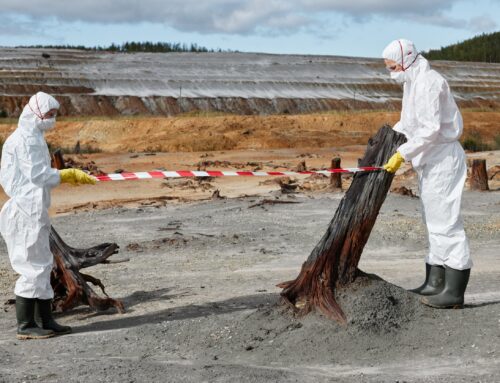
A contaminated site assessment identifies hazards and exposure pathways and determines whether remediation is required.
It is needed for property sales, redevelopment, council permit conditions, or when unusual soils, odours or past industrial use are identified.
The assessment provides a sampling plan, contaminant list, and an initial remediation strategy that regulators accept.
How is site assessment and sampling carried out?
Assessment begins with a desktop study and a site walkover to gather historical and visual evidence.
Targeted sampling uses hand augers, shallow pits and boreholes to collect soil, and may include groundwater or vapour sampling where needed to identify potential contaminants.
Samples are sent to NATA-accredited laboratories with full chain-of-custody documentation and an agreed-upon testing suite.
Results are presented in a technical report that states contaminant levels, spatial extent and recommended next steps.
What contaminants do we commonly test for?
Common targets include hydrocarbons, solvents, heavy metals, asbestos fibres, pesticides, and PFAS.
Each contaminant affects which sampling methods and laboratory tests are required, and which remediation options are viable.
Testing depth and frequency are chosen to define the full vertical and lateral extent of contamination.
What are the treatment and removal options for contaminated soil?
Select the remedial approach based on contaminant type, concentration, site constraints and land use objectives.
Each method has trade-offs in cost, time, regulatory acceptance and site disruption.
How is excavation and disposal managed to meet regulations?
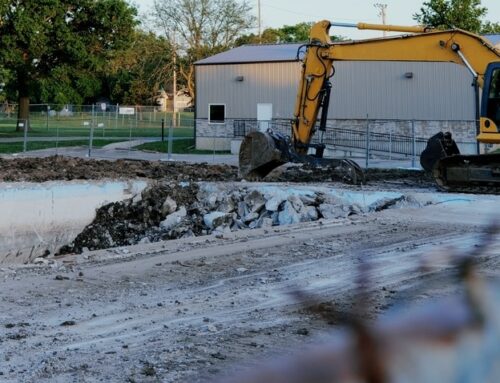
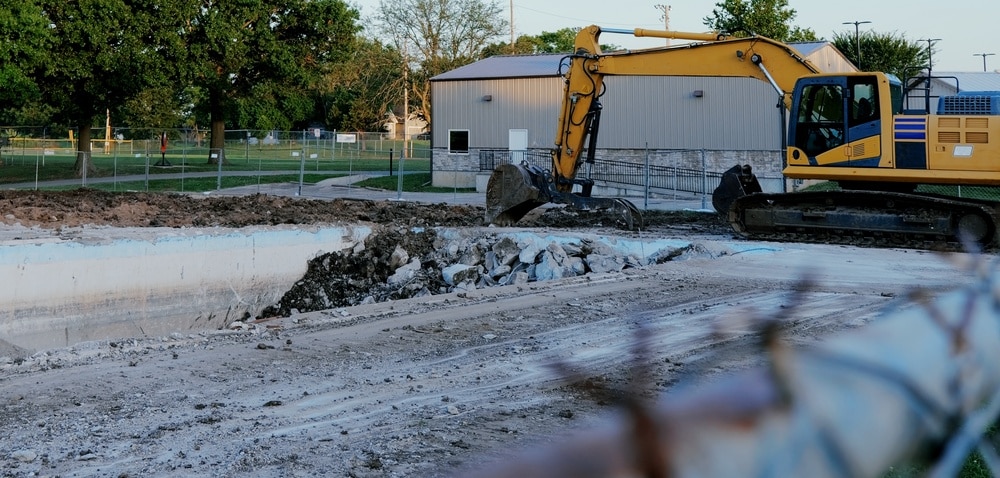
Excavation includes containment, dust suppression and secure stockpiling on impermeable surfaces when required.
Contaminated soil is disposed of at EPA-approved facilities, with waste tracking records maintained.
Documentation of movement and disposal is essential for council inspections and EPA auditing.
When is in-situ treatment appropriate?
In-situ treatment suits diffuse contamination, deep contamination where excavation is impractical, or the retention of site material.
Bioremediation works well for hydrocarbon-impacted soils, while chemical oxidation rapidly treats certain organic contaminants.
Soil vapour extraction is effective for volatile contaminants, and stabilisation immobilises metals, reducing the risk of leaching.
How do common remediation techniques work and when are they used?
- Excavation and Disposal
- This method removes contaminated soil from the site and disposes of it at an approved facility.
- It is used when contamination is localised, shallow, or requires quick removal.
- Bioremediation
- This method uses natural microbes to break down certain contaminants in the soil.
- It is often used for hydrocarbon-impacted soils where a slower, low-disruption solution is suitable.
- Chemical Oxidation and Reduction
- This method introduces approved chemicals that break down or change contaminants into less harmful forms.
- It is used when a faster treatment is needed for specific organic contaminants or solvents.
- Soil Vapour Extraction
- This method removes volatile contaminants by drawing vapours from the soil using a vacuum system.
- It is suitable for contamination in the unsaturated soil zone, especially where vapours may pose a risk.
- Stabilisation and Solidification
- This method mixes binders into the soil to lock contaminants in place and reduce movement through the ground.
- It is often used for metals or other contaminants that are better controlled than removed.
- Thermal Treatment
- This method uses heat to destroy or remove persistent contaminants from the soil.
- It is chosen for more difficult contamination that does not respond well to simpler treatments.
Who else publishes similar guidance in Central West NSW?
Local demolition and remediation businesses, as well as asbestos removal specialists, provide soil remediation pages and practical guides.
Regional remediation providers often present step-by-step processes and validation requirements, which can be compared for depth and local detail.
| Method | Typical contaminants | Disruption | Best for |
|---|---|---|---|
| Excavation and Disposal | Localised heavy contamination, asbestos | Moderate to high | Rapid risk removal |
| Bioremediation | Hydrocarbons | Low to moderate | Petroleum-impacted soils |
| Chemical Oxidation | Organics, some solvents | Moderate | Rapid treatment of soluble organics |
| Soil Vapour Extraction | Volatile organics | Low to moderate | Unsaturated zone volatiles |
| Stabilisation | Heavy metals | Low | Immobilisation where removal impractical |
| Thermal Treatment | Persistent organics | High | Destruction of difficult organics |
How can we help you with contaminated site remediation?
At Central West Demolition, we are proud of our reputation as the locals’ choice for contaminated site remediation Central West NSW.
We conduct site assessments, EPA-compliant removal or in-situ treatment, and independent validation reporting to ensure your site meets regulatory standards.
Contact us today to arrange a site visit and plan your soil remediation Central West project.




Leave A Comment