

The nature of commercial demolition makes planning and conducting a project more complex. Often involving large buildings on large sites, and located on busy CBD streets, in shopping malls, or shared buildings.
You should ensure you work with professional demolition contractors.
This article helps you understand what to expect. We describe various approaches to Central West Commercial Demolition and how experienced teams plan demolition projects.
You will learn about the required approvals and permits, and we will conclude with a step-by-step walkthrough of a commercial demolition.
What is Commercial Demolition?
Commercial demolition Central West aims to demolish and remove a structure or building.
- Complete or partial demolition of business premises.
- The structures vary tremendously. They may be shopping centres, warehouses, or factories. They are often located in shared, multi-occupancy sites, such as shopping malls or office blocks.
- With larger buildings and sites, often with car parks, or in busy town centres, commercial demolition is more complex. It is not like knocking down a house. It requires a professional, experienced approach to planning and execution.
- Commercial demolition projects require local authority approvals before work can begin. A local demolition crew will be able to guide you through the process.
Types of Commercial Demolition Methods
Your commercial demolition project is unique. The demolition approach will be based on factors such as structure type, location, and site constraints.
Mechanical Demolition
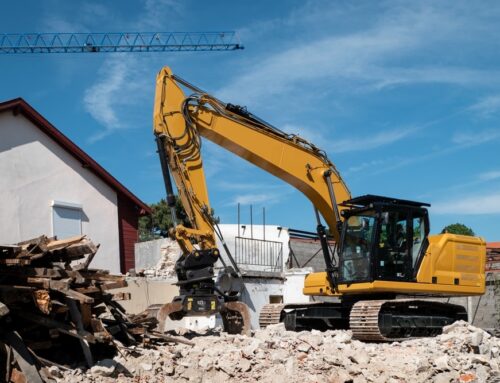
- The use of equipment such as bulldozers, excavators, and hydraulic crushers, operated by experienced operators, helps the demolition process be faster and more efficient.
- Mechanical Demolition using heavy equipment is the most common method for large commercial properties.
- Multi-storey buildings are demolished floor by floor, with supports used.
- Debris and waste material are separated and sorted for recycling, where possible.
Selective Demolition
- Selective demolition may mean the targeted removal of specific building sections to enable modernisation or renovations.
- Especially for businesses in town centres or on business parks, neighbouring properties must often be protected and preserved.
- Interior strip-outs of walls, fixtures, and fittings take place before full demolition begins.
- The demolition team will normally try to salvage valuable materials and fixtures for resale or donation.
Planning Your Commercial Demolition Project
Professional demolition contractors will plan effectively to prevent delays, reduce costs, and ensure safety throughout the project.
- A site assessment will allow a structural review of the structure to be demolished.
- They begin planning, defining the scope and objectives of the work required.
- The project budget and timelines are established via a detailed demolition plan.
- Your free detailed quote will be produced, based on the plans.
Permits and Approvals for Commercial Demolition in NSW
Before beginning Central West Commercial Demolition, or anywhere within NSW, you must have relevant approvals in place. This process ensures your project is compliant with local authority and NSW guidelines and regulations.
Development Application Requirements
- A development application should be submitted to your local council.
- The application must include documentation such as site plans, demolition plans and your approach to waste management.
- A permit to start work often includes conditions like notifying neighbouring properties of demolition plans.
- Note that the approval process normally takes several weeks.
Compliance with SafeWork NSW Regulations
All construction and demolition work in NSW must adhere to SafeWork NSW codes of practice.
There are clear work health and safety requirements for demolition sites.
Your project must comply with certain environmental protection obligations.
The regulations require the definition of planned public safety and site security measures.
The Commercial Demolition Process
To help you understand the process, we walk through the typical phases of a commercial demolition project from start to finish.
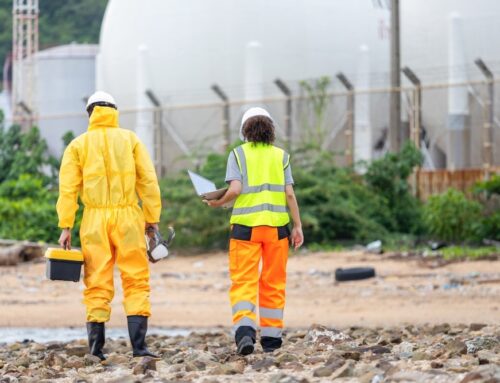
Site Inspection and Hazard Assessment
- The first step is always a site survey conducted by a professional expert.
- They will note structural weaknesses and any potential risks or hazards.
- The proximity to boundaries, utilities, and neighbouring buildings is assessed.
- The site visit helps identify the documentation that will be needed for insurance and legal compliance.
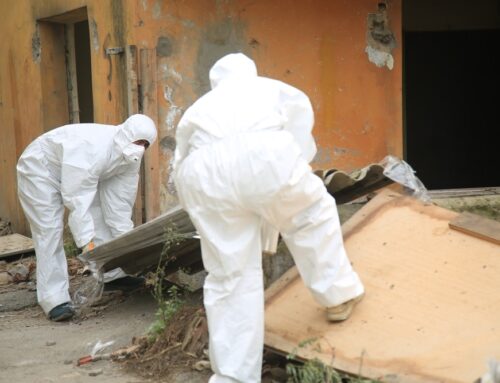
Asbestos Inspection and Removal
- An asbestos audit is mandatory for older commercial buildings.
- Asbestos removal may only be carried out by licenced, qualified professionals.
- Material must be safely transported and disposed of at approved, registered facilities.
- Asbestos removal must be completed before demolition work can begin.
Utility Disconnection and Site Preparation
- Services, including gas, water and electricity, must be disconnected before the project starts.
- You should contact the relevant utility providers so that the service disconnections are completed by qualified professionals.
- Site preparation includes the erection of fencing and safety barriers, warning signs and monitored site access points.
- An approach to waste management and recycling systems is established.
Demolition Execution
- The process will follow approved demolition plans and methodologies.
- Appropriate equipment will be used for the particular type of structure.
- Dust suppression techniques and noise control measures will be implemented to protect workers and the wider local community.
- Supervision will ensure ongoing safety and regulatory compliance.
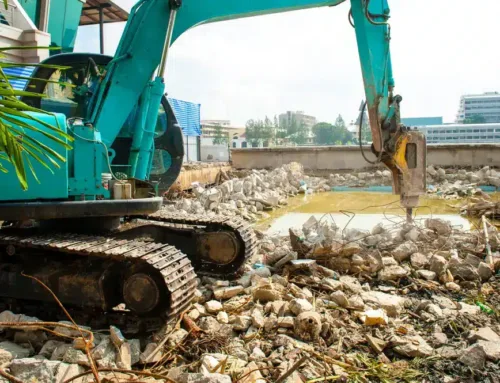
Debris Removal and Material Recycling
- Debris is sorted by category, such as metal, timber, concrete, bricks, and general waste.
- Waste is recycled to avoid the use of landfill if possible.
- Trucks transport materials to approved recycling facilities
- The remaining debris and non-recyclable waste are disposed of at licensed sites.
Site Cleanup and Final Inspection
- When the structure is demolished, the cleared site is graded and levelled.
- Any remaining debris or other hazards will be removed from the site.
- Relevant authorities will conduct a final inspection and issue demolition completion certificates.
- The site is prepared for future development.
Choosing a Commercial Demolition Contractor in Central West NSW
Choosing the best commercial demolition contractor can mean a fast, efficient and safer process for you.
At Central West Demolition, we provide professional commercial demolition services throughout the Central West region. We are acknowledged as the trusted local experts in all types of commercial demolition projects, from small retail spaces to large industrial facilities.
We handle every aspect of the process, including permit applications, hazardous material removal, and site remediation.
Contact Central West Demolition for advice you can depend on. Ask your questions and arrange a site visit to get your free quote.



Leave A Comment